Latest Real Estate News

Latest Real Estate News

Subscribe and receive email notifications of new blog posts.


rss logo RSS Feed
DeLand | 1 Posts
Luxury | 2 Posts
Ormond Beach | 1 Posts
Ponce Inlet | 1 Posts
Value | 2 Posts
Waterfront | 2 Posts
April
9

There may be a property tax revolt surging across the U.S., but the reality is that most states still collect property taxes—and they've risen across the board. Nationwide, the effective tax rate for single-family homes in 2025 was 0.9%, up from 0.86% in 2024 and the highest since 2020, when the national effective tax rate was 1.1%, according to the latest property tax report from data analytics firm ATTOM . The average single-family home, now valued at $494,231, generated $4,427 in taxes, a 3% increase over 2024. And despite the estimated value for a single-family home in 2025 being down 1.7% year over year, 2024's values were still higher than the years prior, making 2025’s average estimated value for single-family homes one of the highest recorded. "Property taxes in 2025 demonstrate that tax bills reflect more than just home values," said Rob Barber , CEO of ATTOM. "Even with a slight dip in prices, higher tax bills combined with declining home values led to an increase in effective tax rates, underscoring the role of local government costs and shifting tax policies." Which states are taxed the most—and least? Where you live can make a big difference in your tax bill. The states with the highest effective tax rates were (in order): Illinois, New Jersey, Vermont, Connecticut, and Ohio. The lowest were: Hawaii, Idaho, Wyoming, Arizona, and Alabama. With property taxes tied to home valuations, it's no surprise that pricey Northeast states had the highest invoices. New Jersey led the list ($10,499), followed by Connecticut ($8,901), New Hampshire ($8,174), Massachusetts ($7,904), and New York ($7,732). But real estate experts say the big bills aren't bothering buyers—at least those with means. "Buyers are consistently drawn to Boston because of its world-class hospitals, universities, and overall quality of life," George Sarkis of Douglas Elliman tells Realtor.com®. "For many buyers, especially those relocating for work or education, the access to those institutions justifies the higher tax environment, and we're not seeing a meaningful exodus because of it." Jessica Chestler of Douglas Elliman in NYC echoes the sentiment. "We’re not seeing property taxes deter serious buyers in New York City right now," she tells Realtor.com. "For buyers, especially at the higher end, the focus is on lifestyle and opportunity. They understand what New York offers and are willing to pay for it, so property taxes are rarely the deciding factor." "Many buyers understand that higher tax bills can come with trade-offs they value, whether that is access to strong public services, desirable neighborhoods, or other long-term benefits tied to the location," agrees Michael Reisor of Compass in NYC. But he says that doesn't mean buyers aren't looking closely at those numbers. "When buyers are evaluating a condo, co-op, or townhome purchase, they are absolutely paying attention to carrying costs and thinking carefully about what those obligations will look like over time," he says. For lower property taxes overall, head to the South. The states with the lowest average bills were West Virginia ( $1,081), Alabama ($1,284), Arkansas ($1,387), Mississippi ($1,563), and Louisiana ($1,639). The Midwest didn't escape higher taxation. It may surprise some that Nebraska has a slightly higher effective tax rate than New York. But given that Nebraska's homes are generally much cheaper, your tax bill is still likely to be a lot less there. Then, there is Illinois. While valuations in the Prairie State are much lower on average than in Northeast states, this Midwest state has the highest effective tax rate at 1.84%. So it's no shocker that Illinois is one of the states revolting. In October 2025, Republican state Sen. Neil Anderson introduced SB 1862 to create a homestead exemption that eliminates property taxes for homeowners who have paid property taxes for at least 30 years. Highest taxed states: Illinois Effective tax rate: 1.84% Median home price: $299,450 This three-bedroom, five-bath house in Tinley Park, IL, is priced at a quite reasonable $434,900. (Realtor.com) New Jersey Effective tax rate: 1.58% Median home price: $544,450 Vermont Effective tax rate: 1.4% Median home price: $495,000 Connecticut Effective tax rate: 1.36% Median home price: $507,500 This $415,000 three-bedroom home in Farmington, CT, comes with a $5,504 annual tax bill. (Realtor.com) Ohio Effective tax rate: 1.32% Median home price: $272,450 New Hampshire Effective tax rate: 1.29% Median home price: $587,450 Iowa Effective tax rate: 1.25% Median home price: $279,000 Pennsylvania Effective tax rate: 1.24% Median home price: $300,000 Nebraska Effective tax rate: 1.24% Median home price: $345,000 A surprise entrant to the list is Nebraska. This six-bedroom home built in 1916 on Grand Island is only $100K. (Realtor.com) New York Effective tax rate: 1.23% Median home price: $672,000 Lowest taxed states: Hawaii Effective tax rate: 0.33% Median home price: $747,545 This two-bedroom, two-bath townhome in Honolulu has the low asking price of $200,000 because it is a leasehold that expires in 2044. Last year's tax bill was only $3,036. (Realtor.com) Idaho Effective tax rate: 0.39% Median home price: $575,000 Wyoming Effective tax rate: 0.40% Median home price: $444,500 Arizona Effective tax rate: 0.43% Median home price: $475,000 This two-bedroom $249,000 condo in Scottsdale, AZ, comes with a low $827 annual tax bill. (Realtor.com) Alabama Effective tax rate: 0.43% Median home price: $333,675 Utah Effective tax rate: 0.45% Median home price: $575,000 Delaware Effective tax rate: 0.48% Median home price: $499,450 This three-bedroom brick midcentury ranch in Wilmington, DE, is priced at $399,000 and had a low $788 tax bill in 2024. (Realtor.com) West Virginia Effective tax rate: 0.48% Median home price: $249,750 Tennessee Effective tax rate: 0.50% Median home price: $425,250 Nevada Effective tax rate: 0.52% Median home price: $485,000 #AdamsCameron #Since1963

Read More

April
8

When Buying a Home Feels Out of Reach, Some Families Do This Instead

For a lot of people, the math on buying a home just doesn’t really work right now. Maybe that’s how it feels for you too. You look at the cost of buying. Then you look at the cost of childcare. And it starts to feel like you have to choose one or the other.

But some families are finding a way to make both work by doing something a little different: teaming up to purchase a multi-generational home.

One Reason This Is Becoming More Common

It’s no secret that affordability has been a challenge in recent years. But for families with young kids, there’s an added layer that can make it feel even harder: childcare.

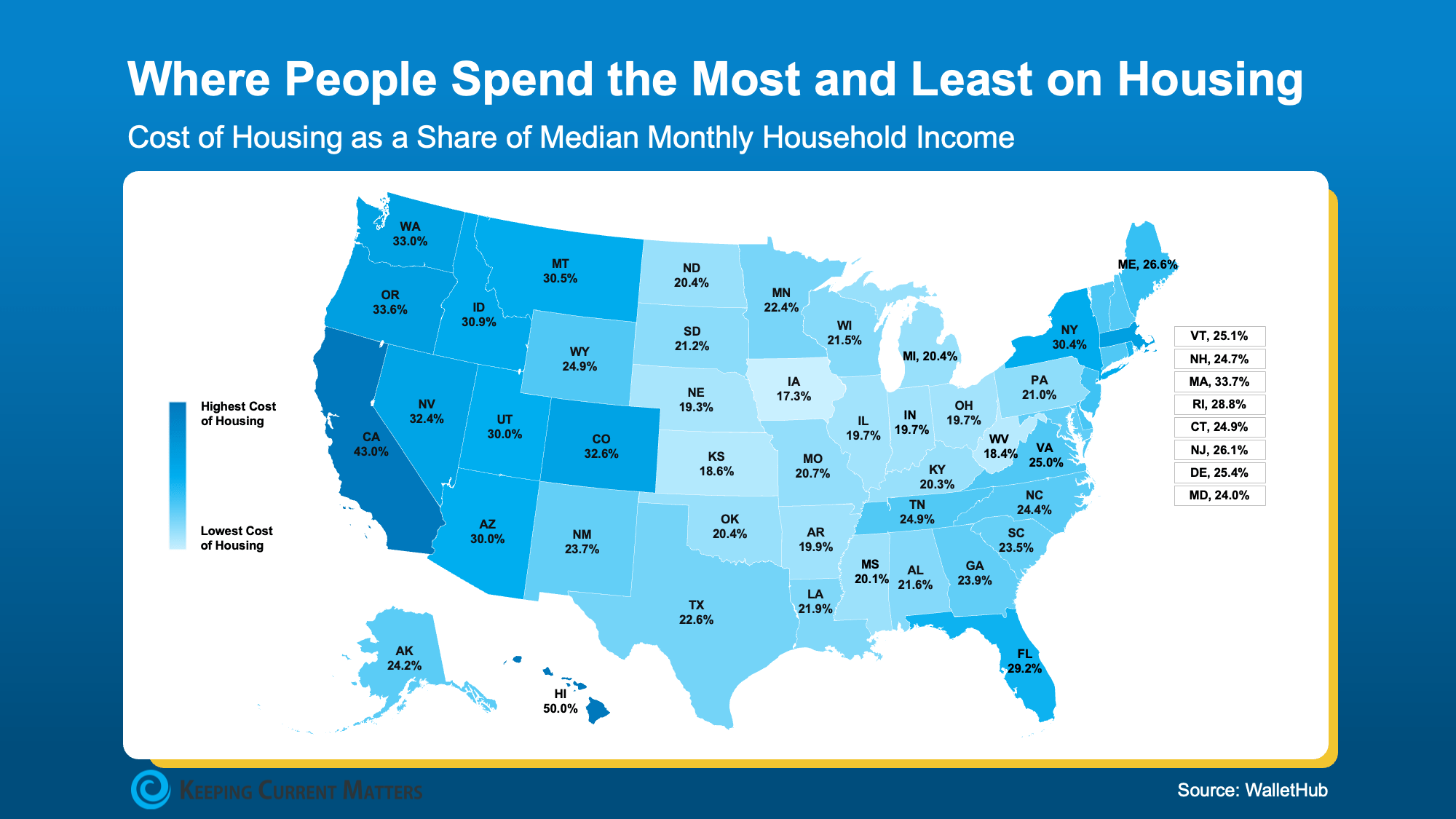
According to the Department of Health and Human Services, childcare should take up no more than 7% of your monthly income. But in reality, the average married couple spends closer to 10% (see map below):

a map of the united statesWhen you combine that with the cost of buying a home, it’s easy to see why things can feel stretched. That’s exactly why more families are starting to rethink how they approach both. The Solution More People Are Turning To: Multi-Generational Living

One option gaining traction? Multi-generational living. That’s when parents, grandparents, or other relatives buy a house together and live under the same roof. And it’s not just about convenience anymore. It’s becoming a go-to strategy.

You can see it in the data. According to the National Association of Realtors (NAR), almost 1 in 7 homebuyers (14%) bought a multi-generational home in 2025 (see graph below):

a graph of a homebuyers bought a multi-generation homea graph of a homebuyers bought a multi-generation home

And for the first time, childcare is showing up as a key reason why they chose this option. As NAR explains:

“This year’s report features two new primary reasons for purchasing a multi-generational home: grandchildren living in the home (12%) and to help reduce the cost of childcare (6%).”

Why It Works

Buying a multi-generational home solves two big challenges at the same time.

First, it shares the financial responsibility. If you pool multiple incomes together, you may be able to afford a home you couldn’t have on your own. Second, it can also solve the childcare puzzle. When grandparents or other relatives live in the home, they may be able to help with daily care – which can significantly reduce or even eliminate daycare costs.

And for many people, that combination is what finally makes their move possible.

If the costs of childcare and housing together have made buying feel out of reach right now, it may be worth exploring creative options like buying a home with your loved ones.

Bottom Line

If you want more information on multi-generational homes, talk to a local agent about what’s available in your area.

Sometimes the path to homeownership isn’t doing it alone. It’s doing it together.

Members: Sign in now to set up your Personalized Posts & start sharing today!

Not a Member Yet? Click Here to learn more about KCM’s newest feature, Personalized Posts.

#AdamsCameron #Since1963

Read More

April
8

Is there anyone who actually enjoys the onslaught of random sales calls and texts? No matter what you do, or how many “filters” your phone promises, there always seems to be a way for them to sneak through and interrupt your day. Sure, you can ignore them. But they’re still a nuisance. And sometimes they create extra work… like scrambling to Google a number mid-ring to figure out if it’s legitimate or just another robocall. Most of the time, it’s easy to assume it’s spam. But when you’re in the process of buying a house, they’re not as easy to ignore. If a call, text, or email comes through and it looks like it’s from a mortgage company, there’s a much better chance you’ll answer, just in case it’s important or related to your purchase. And sometimes, the person on the other end can sound surprisingly informed, like they somehow know you’re in the middle of a transaction. (Spoiler alert: they do.) When that happens, a lot of buyers assume their information must have been shared by their real estate agent, which can certainly feel frustrating and annoying. But the reality is… it almost certainly wasn’t your agent. Your Agent Isn’t Giving People the Inside Scoop… If you find yourself getting calls from lenders other than the ones you personally contacted, it’s highly unlikely that it’s because your real estate agent is selling your information to them. In fact, they can’t. There are strict federal laws under the Real Estate Settlement Procedures Act (RESPA) that prohibit agents from receiving compensation for referring business to lenders or other service providers. Agents will often recommend lenders, inspectors, attorneys, and other professionals they know and trust to their clients. But that’s very different from handing out your contact information to random companies. Most agents are careful about this and will either give you a list of options or make an introduction with your express permission. So it’s highly unlikely that your agent is the source of those surprise calls. But that doesn’t mean someone else (or rather something else) isn’t giving them the scoop. So where are these calls coming from? They’re coming from something called trigger leads. When you apply for a mortgage—or even just have your credit pulled as part of the pre-approval process—that activity gets recorded by the credit bureaus. And in many cases, that information is then sold (legally) to other lenders. Those lenders see that you’re actively in the market for a mortgage, and they jump on the opportunity to reach out with competing offers. Once that happens, your phone can get bombarded with calls, texts, and emails from lenders you’ve never heard of. New Rules Might Cut Down on the Trigger Calls The good news is that this has been getting a lot of attention, and there has been some progress. According to a recent update highlighted by the National Association of Realtors, new federal legislation went into effect on March 5, 2026, aimed at curbing the misuse of trigger leads. The goal is to limit how and when lenders can use this information. Under the new rules, trigger leads are restricted to more specific situations—like when someone is in the middle of an active real estate transaction—and only when the outreach includes a legitimate, firm offer of credit. So technically, you shouldn’t be bombarded with as many calls, texts, and emails. But as with most regulations, companies will study the fine print and look for ways to work within (or around) the rules. So while the volume of calls may decrease, it’s probably unrealistic to expect them to disappear entirely. You Can Always Opt to Opt Out! If you truly want to reduce unsolicited contact from lenders, one of the simplest steps you can take is to opt out of prescreened credit offers ahead of time through OptOutPrescreen.com . It might not eliminate everything, but it can significantly reduce the number of lenders who are able to contact you based on your credit activity. But regardless of whether you’re able to completely stop the calls, it’s a good rule of thumb to focus on working with people you reach out to, rather than the ones who seek you out. Ask for recommendations from people you trust—friends, family, and of course, your real estate agent—and reach out to the ones they suggest. And simply ignore the rest who somehow find you on a list. The Takeaway: When you’re in the process of buying a house, it’s common to get bombarded by calls from random lenders you never contacted. It’s annoying and people sometimes think that their agent shared (or sold!) their information. But it’s not your agent sharing your info. It’s the result of trigger leads , caused by credit bureaus selling data that indicates you’re in the market for a mortgage. New legislation took effect in March 2026 designed to limit trigger leads, which should help cut down on the calls, texts, and emails. But it likely won’t eliminate it completely. Your best bet is to opt out of prescreen offers at OptOutPrescreen.com and focus on lenders referred to you by people you trust. The post How Random Lenders Find Out You’re Buying a House… And How to Stop Them From Calling appeared first on Lighter Side of Real Estate . #AdamsCameron #Since1963

Read More

April
2

You may have seen the headlines making the rounds lately about a homeowner who supposedly sold his house using AI. At face value, it sounds like something straight out of the near future. Most of the headlines made it seem like the guy typed in a few prompts and AI handled the marketing, found a buyer, guided the negotiations, and just like that… sold. But if you actually listen to an interview with the seller, the story sounds a little different. He makes it clear that AI was more of a tool helping with pricing ideas, marketing, and understanding the general process of selling a house. He also openly admitted that he hired an attorney to review the contract. So, like a lot of things you see online, it wasn’t quite as simple as it was made to sound. And as it turns out… he had even more help than he let on. The Part That’s Not Getting Talked About According to this article from the National Association of Realtors , there’s a key detail that tends to get left out of the story. There was a real estate agent involved. Not representing the seller, but representing the buyer—and in the process, doing a lot more than just “bringing the buyer.” While the seller enlisted the help of an attorney, he still found himself needing timely help and answers. So the agent ended up taking calls from the seller on a daily basis, from as early as 7:30 AM to as late as 11 PM one evening, helping answer his questions and guiding him through the process. In other words, doing many of the things a listing agent typically does, in order to help her client successfully buy a house from a seller who didn’t know the process. The reality is, this wasn’t a case of “AI handled everything.” There were still several humans involved, and one of them was an experienced real estate agent helping navigate the deal. Headlines Should’ve Said: “Local Man Sells House for Sale by Owner” When you really stop and think about it, this really is nothing more than a story about a For Sale By Owner (FSBO) transaction. This is really nothing new. A percentage of homeowners choose to go that route every single year. Some have success. Most quickly realize there’s more to the process than they expected. The only difference here is the tool being used. Not many years ago, this headline might have read: “Homeowner Sells House Using the Internet!” People have used Google to find information, online tools to create marketing for their home, and websites to expose their home to the market. Today, it’s AI. Different technological innovation. Same basic concept. Because at the end of the day, technology can help you get in the game… but it doesn’t suddenly make you an expert in everything that happens once you’re in it. Then Again, FSBOs Are at an All-Time Low… According to the National Association of Realtors , despite all the technology available today, For Sale By Owner transactions are at an all-time low, accounting for just 5% of all home sales. So all of those headlines probably should have focused on the fact that he sold his house FSBO! That’s probably more accurate. At a time when sellers have more access than ever to information, marketing tools, and now AI, the overwhelming majority still choose to work with a real estate agent. That doesn’t mean technology isn’t helpful. It is. AI can give you ideas, help you understand the process, and even make you feel more confident getting started if you’re thinking about selling on your own. But there’s a big difference between having access to tools, and knowing how to navigate everything that happens once your home hits the market. Pricing strategy. Buyer psychology. Negotiations. Inspections. Appraisals. Timelines. The unexpected issues that almost always come up along the way. That’s where experience tends to matter most. So if you’re thinking about using AI to sell your home based on this story, just know there’s more to it than meets the eye—and a reason why most sellers still choose not to go it alone. The Takeaway: A recent viral story about someone selling their house using AI makes it sound like the future has officially arrived. The headlines make it seem like all you have to do is type a few prompts, sit back, and watch your house sell. In reality, AI helped with some of the early steps, but there were still plenty of humans involved—including a buyer’s agent who ended up fielding calls and walking the seller through much of the process. So what you’re hearing about wasn’t a fully automated home sale. It was a For Sale By Owner deal with some tech mixed in. And considering FSBOs are at an all-time low of just 5%, that’s probably the part that should have made the headlines. The post The AI Home Sale Story Everyone’s Talking About… Is Missing One Key Detail appeared first on Lighter Side of Real Estate . #AdamsCameron #Since1963

Read More

March
29

This’ll Change What You Think About Investors in Today’s Housing Market

There’s a lot of noise out there right now about investors in the housing market.

Some headlines make it sound like big Wall Street firms are buying up everything in sight. And if you’re trying to purchase a home yourself, that can make it feel like the odds are stacked against you.

But when you take a closer look at the data, a very different picture starts to come into focus.

Most Investors Are Just Everyday Owners

For starters, when you hear the word investor, you probably picture big corporations. And that misconception is a large part of what’s feeding into the myth that they’re buying up all the homes.

Most investors aren’t big companies, at all.

They’re everyday people just like you.

They’re someone who owns a second home (like a vacation house at the river), a neighbor who has 1 or 2 rentals, or even a homeowner who tried to sell their home, didn’t get the price they wanted, and decided to rent it instead.

And when all of these groups are lumped together in the headlines, the number of investors sounds high – especially if you’re operating under the assumption all investors are big investors.

But here’s what the numbers really show when you drill down.

Institutional Investors Are a Small Slice of the Housing Market

Large institutional investors, those big companies buying homes, actually make up a very small share of the overall housing market.

According to BatchData, the largest investors (those with 1,000+ homes) own just 0.4% of the 86 million single-family homes in the country. And their share of the market is actually shrinking.

Data from Parcl Labs shows big investors are selling 4 homes for every 1 they’re buying right now (see visual below):

a graph of a home sellinga graph of a home selling

That means they’ve actually added almost 1.7k homes back into the market lately.

What This Means for You

The story is clear. Instead of aggressively buying up homes, most of these companies are stepping back, which means less competition from them than you might expect. If you were someone who thought they were dominating the market, let that give you some peace of mind.

Most of the competition you’ll face is from other everyday buyers – people just like you. And with most large investors stepping back, there may be more opportunity in the market than you think.

Bottom Line

It’s easy to assume big investors are taking over the housing market, but the data tells a different story. If you want an expert's opinion on what investor activity looks like in our area, talk to a local agent.

Because odds are, it’s not as big a factor as you may think.

Members: Sign in now to set up your Personalized Posts & start sharing today!

Not a Member Yet? Click Here to learn more about KCM’s newest feature, Personalized Posts.

#AdamsCameron #Since1963

Read More

⇦ Newer PostsOlder Posts ⇨

Login to My Homefinder

Pixel